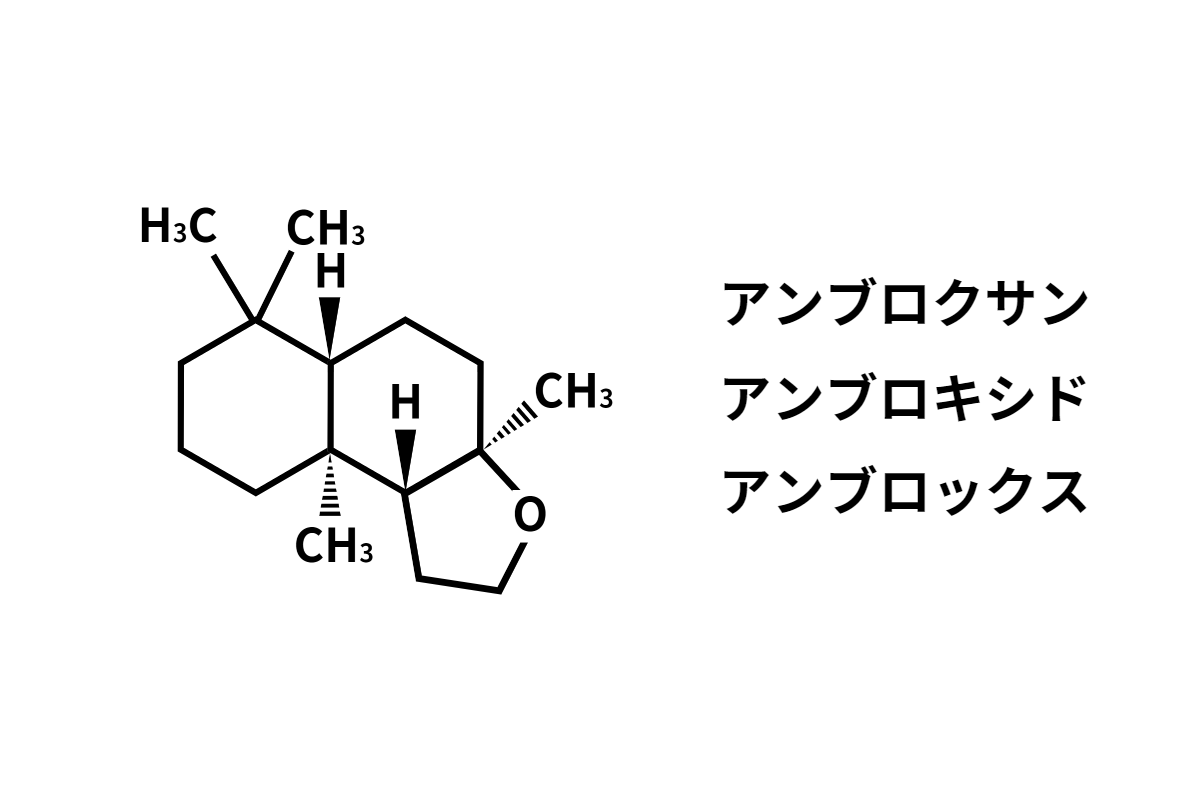
Ingredient Guide
Ionone is a major component of violet. Large amounts of ionone temporarily weaken the olfactory receptors, so if you smell a violet flower but cannot detect its scent, this is said to be a likely reason.
In 1893, the chemists Tiemann and Krüger discovered ionone, making it possible to produce the scent of violets inexpensively.
The ionone family includes α-ionone, β-ionone, methyl ionone, and irone.
- α-Ionone: A floral scent closest to that of violet flowers.
- β-Ionone: Has a scent reminiscent of freesia, as well as raspberry-like fruitiness.
- Methyl ionone: A little woodier than ionone, with an iris scent touched by a violet nuance.
- α-Irone: The woodiness of iris, raspberry-like sweetness, and powderiness.
- β-Irone: Fresh, woody, and powdery.
The first violet perfume to use ionone was Vera Violetta (Roger & Gallet, 1895, Henri Roger). The person who made this scent a foundation of tea perfumery was Jean-Claude Ellena.
β-Ionone is a synthetic ingredient discovered in 1893, but for almost a century its scent was identified with that of violets. I found a new use for β-ionone by combining it with a jasmine-scented ingredient, Hedione, to create a green-tea accord. This is how Bvlgari’s “Eau Parfumée au Thé Vert” was born. The perfume became a model for scents on the market and changed the meaning of a smell. Ionone no longer smelled only of violets; it also carried the aroma of tea.
Jean-Claude Ellena
What Does It Smell Like in Perfume?
Ionones, methyl ionones, and irones all bring violets or orris to mind, but they are distinct materials. β-Ionone is a single compound that ranges from cedar-like woodiness to a soft violet scent depending on concentration. Methyl-ionone mixtures such as IRALIA create a powdery orris character with a fruity touch. Natural orris extracts, meanwhile, contain irones formed as the rhizomes mature. Even when their olfactory characters are similar, their origins differ: synthetic molecules, mixtures of isomers, and natural extracts.
Choosing Ionone Fragrances
Violet flowers, powdery softness, dry woods, and tea are useful guides when exploring ionone-like scents.
- Violet flowers: Violet scents suit those who enjoy sweet flowers combined with greenness.
- Powdery softness: Iris and orris suit those who prefer quiet, powdery or woody scents to showy florals.
- Tea and dry woods: The green tea accord discussed in the main text is another example of how ionones can be used.
From Ionone to Your Next Fragrance
Once you have a sense of the scents you enjoy, open our Fragrance Finder. Choose “Favorite fragrances & notes” on the home screen, search in the “Favorite notes” field, and select an option from the suggestions shown. Choose “Next” to continue. You can start with notes even if you do not yet have a favorite perfume.