

The program trains profiles that combine creativity, olfactory culture and technical expertise.
Nicholas Salado (General Director, ISIPCA, June 2026)
Learning to distinguish ingredients by smell, combine them, and revise trials: from whom, and where, does one learn this repeated practice? Education at fragrance company IFF includes in-house training undertaken after joining the company and a partnership program to which students apply through the specialist French school ISIPCA.
IFF University is the name of an internal learning framework established in 2017. By contrast, IFF and ISIPCA’s Scent Design & Creation is a public program launched in 2016. Both connect to IFF’s work of developing talent, but their application routes and students’ positions differ. This article traces their history and educational content, leading into the ways to study today.
Key Facts
- Name: IFF University
- Operator: International Flavors & Fragrances (IFF)
- Established: 2017, as an internal framework bringing together employee leadership, management training, technical education, and professional skills development
- Related public program: Scent Design & Creation, launched in 2016 by IFF and ISIPCA.
- Main location of the public program: ISIPCA in Versailles, France
- Official information: Employee learning and development at IFF / IFF–ISIPCA partnership program
Origins and History
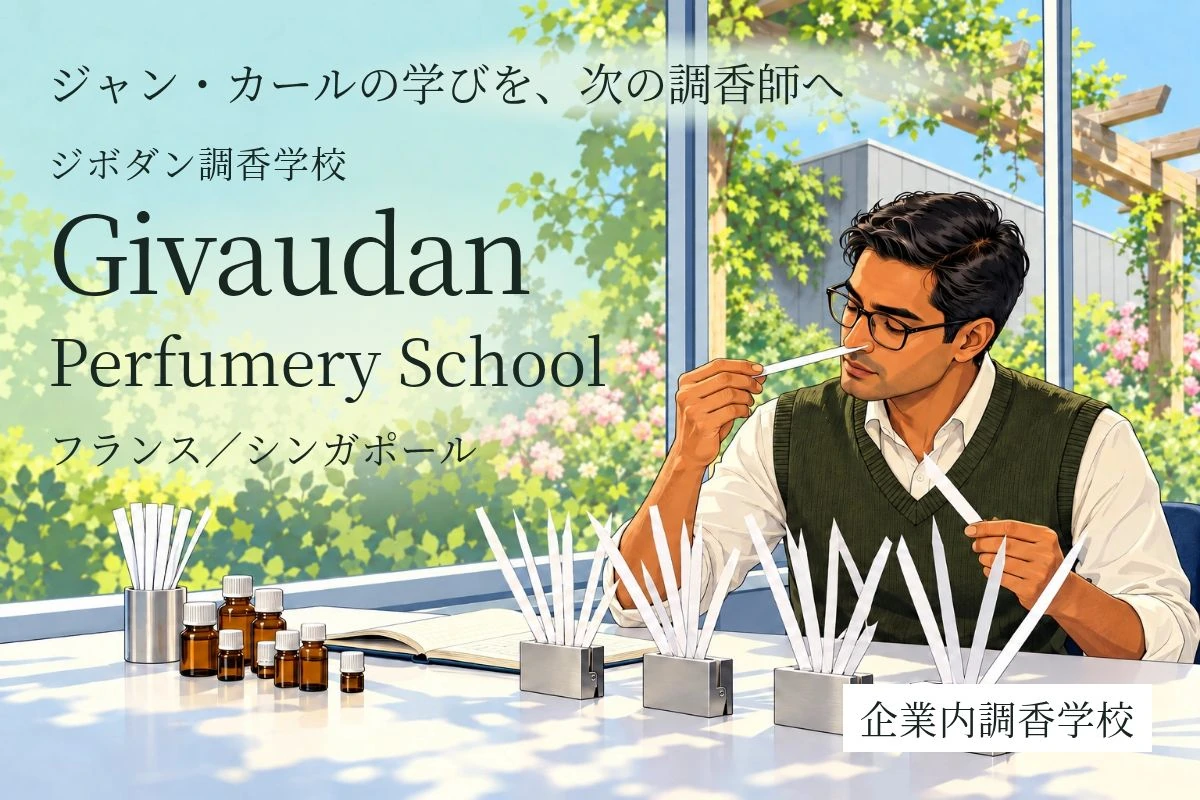
Learning Beside Experienced Perfumers at IFF
Perfumery education at IFF did not suddenly begin in 2017. Its in-house perfumery school was established in 1968 and carries on the educational tradition of Ernest Shiftan. It is a place where experienced perfumers pass knowledge of ingredients and creation to the next generation.
Carlos Benaïm is one person who embodies that connection. Born in Tangier, Morocco, he studied chemistry and engineering in France before applying to IFF in the Netherlands for a management training opportunity. There he worked and studied with Shiftan, Bernard Chant, Max Gavarry, and others. The career of the perfumer who later created fragrances such as Ralph Lauren’s Polo also reflects an education gained through working alongside experienced colleagues.
The internal training is also known as the Shiftan program. Beyond memorizing ingredients, trainees study accords, in which several materials form a coherent scent, short formulas, fine fragrances, and scents for everyday products. In 2021, Barbara Gydé, then responsible for the school’s education, explained how experienced perfumers support each stage of learning.
Each apprentice has a Senior VP perfumer as a mentor for every stage in the program
Barbara Gydé (2021; excerpt)
A mentor offers advice and guidance based on experience. A trial is not simply handed in and forgotten: students receive comments on the scent and think it through again. This exchange turns knowledge of ingredients into creative judgment.
A Partnership Program Opens on ISIPCA’s Campus in 2016
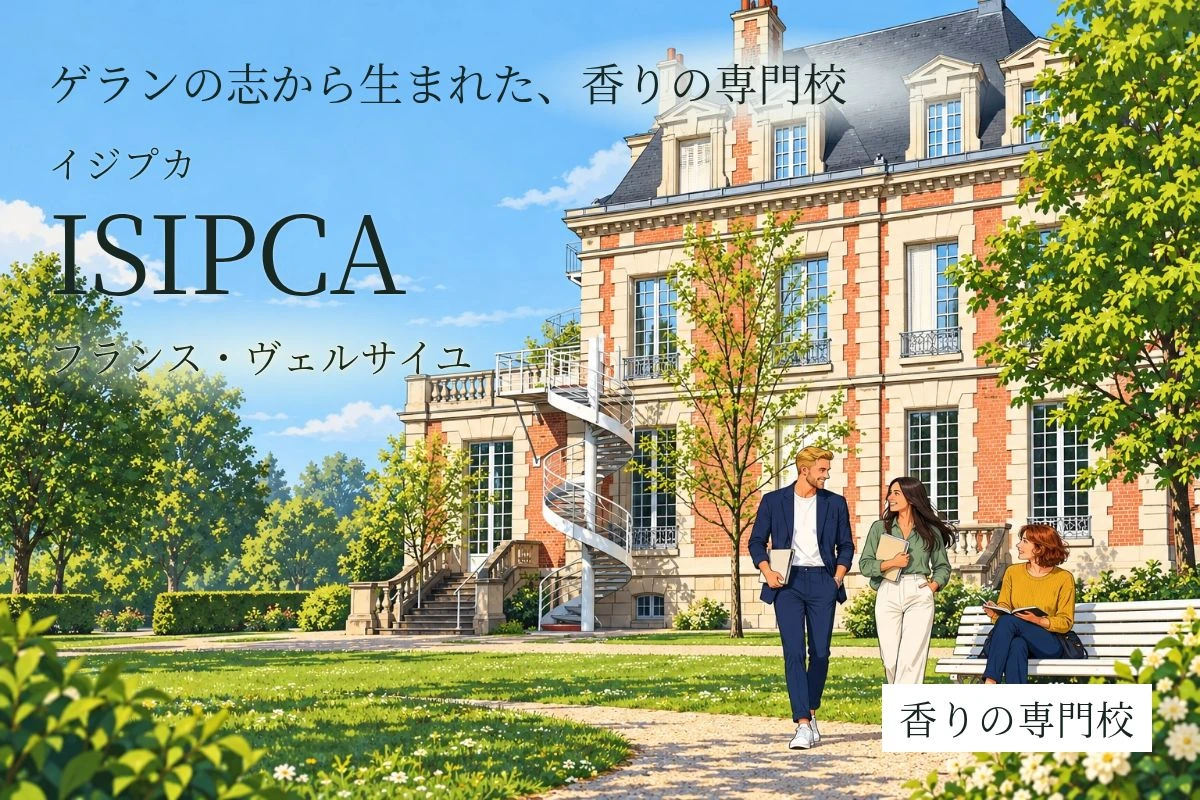
On March 28, 2016, IFF announced its partnership with ISIPCA. The plan was to offer a three-year Scent Design & Creation program on the specialist school’s campus in Versailles. Nicolas Mirzayantz, then head of IFF’s Fragrances business, presented it as an initiative building on the existing in-house perfumery school. On ISIPCA’s side, Cécile Ecalle-Montier emphasized the value of bringing IFF’s practical experience into the school.
Behind the initiative lay the widening scope of a perfumer’s work. In addition to fragrance chemistry and creativity, perfumers need to understand marketing, technology, and business, and connect these with clients and consumers. Combining classroom teaching with a fragrance company’s creative workplace was intended to train not only perfume creators but also those who evaluate scents and guide their development.
On June 24, 2019, an announcement celebrated the first graduates. At the time, the program included the study of 800 ingredients, accords, perfume history, marketing, storytelling, internships at IFF, and guidance from senior perfumers. Valery Claude, who led the program, saw value in extending the knowledge-sharing practiced within the company to students.
IFF University in 2017: Connecting Employee Learning
The year after this partnership program began, IFF brought its diverse internal education activities together under the framework of IFF University. At its launch in 2017, an online platform offered 41 learning topics that employees could work through at their own pace. These included skills needed outside the perfumery laboratory, such as finance, critical thinking, negotiation, and leading change.
The same educational efforts also include internal training for flavorists, who design flavors for food and beverages. They learn ingredients and solvents, the language used to describe flavors, product applications, and creation through mentoring and practical experience. Perfumers and flavorists share a reliance on sensory work, but the products they handle and the purposes of their creations differ.
A series of short videos for employees was added in 2018. Today, IFF continues to place ongoing learning and mentoring within talent development, from the beginning of employment through more experienced stages. IFF University’s role becomes clearer when understood as a system connecting learning across the company rather than as a university admitting the public to a single American campus.
Educational Features and the Learning Process
Knowing Ingredients, Evaluating Scents, and Creating Formulas
The ISIPCA partnership program covers smelling ingredients, fragrance evaluation, formulation, and scientific subjects. Between loving perfume and creating a fragrance in response to a brief lies the knowledge needed to explain, compare, and revise trials.
Teaching includes laboratory exercises, group creative work, and oral presentations. Learning is assessed not only through examinations but also through practical work, projects, and internship presentations. Work toward a finished product requires the ability to communicate one’s sensory impressions to others and share them with a team.
Students do not necessarily come from the same country or culture. In IFF’s official information, graduate Sumukha Kashyap describes learning with multicultural peers:
I loved learning from my multicultural classmates, teachers and mentors at IFF.
Sumukha Kashyap (Scent Design Manager at IFF)
Experiencing Retail, Technical, and Creative Workplaces
ISIPCA’s current information describes professional placements across the three years: two months in retail in the first year, four months in a technical field in the second, and four months at an IFF creative center in the third. A perfumer mentors students during the final placement. This sequence offers different workplace perspectives on how scent is communicated at the point of sale, what is needed technically, and how creation takes place in a creative center.
There is more than one path afterward. IFF describes how partnership-program graduate Shinichiro Oba trained under Anne Flipo in its internal Shiftan program. His career is an example of public-program study connecting with further training after joining the company. Oliver Riva, by contrast, worked at an Italian perfume company after completing the partnership program and joined Takasago in 2025. The destinations of this education are not limited to IFF.
Public Program Requirements, Fees, and Qualification
The following is based on official information for ISIPCA’s Scent Design & Creation program checked on October 12, 2026. These are not the conditions for IFF employee training or for every program at the school.
- Duration and language: three years, full-time, taught in English, mainly in Versailles.
- Intended students: people aiming for work in the fragrance industry, including perfumery, fragrance evaluation, sales, and marketing. Previous employment in the perfume industry is not required.
- English proficiency: the stated thresholds for applicants whose first language is not English are IELTS 6.5, TOEFL iBT 80, and TOEIC 850.
- Selection: application documents and an online motivation interview, followed for shortlisted applicants by an olfactory aptitude test at IFF, a creative presentation, and an interview with the selection panel.
- Fees: the October 2026–November 2029 program listed on the French-language page costs €12,500 per year, or €37,500 over three years. The nonrefundable application fee is €280. Instructions state that 30% of first-year tuition is payable after acceptance.
Science Backgrounds and Application Dates
IFF’s announcement of June 16, 2026 states that a scientific background is not required and that selection considers olfactory ability, academic strength, and individual talent. In its admissions section, ISIPCA’s current French-language page also says that science degrees are preferred but that degrees in fields such as arts and humanities will be considered. However, its overview describes education following a science-based Bac+2, while the English-language page retains wording referring to a bachelor’s degree or two to three years of higher education in science. Applicants from other disciplines should confirm which qualifications the school will accept.
Application dates also differ between pages. The French-language page lists a program beginning in October 2026, while stating both that applications for 2026/2027 will open soon and that the deadline is May 31, 2026. The English-language page states that applications are closed and lists program dates of October 2025–November 2028. As the internship calendar also includes months before the course begins, the next application period and placement schedule should be confirmed directly with ISIPCA’s relevant program. Requirements and fees for the next intake should be checked in the information for that academic year.
Master’s Level and RNCP Level 7 Professional Certification
IFF calls this a master’s-level program. The qualification listed in ISIPCA’s current French-language information is a professional certification for managing the creation and development processes of perfume, cosmetics, or flavor products, registered in France’s RNCP under code 37789 at level 7. The registration expires on July 19, 2028, and the register gives July 19, 2032 as the final date on which the certification may be awarded.
This is a qualification certifying professional competencies. The phrase master’s level alone does not make it equivalent to a French national master’s degree or a Japanese master’s degree. Its RNCP registration specifies award requirements including mastery of designated competency blocks and professional experience such as internships. It also differs from a certificate simply confirming attendance at classes.
In-House Training and Other Ways to Learn
The Shiftan program is training undertaken as an employee, separate from applying to ISIPCA’s fee-paying public program. The education director described 36 months of training in 2021, whereas IFF’s historical account in 2025 describes a four-year apprenticeship. As a route connected to recruitment and internal selection, its specific openings and duration need to be checked in IFF’s recruitment information.
Nor can every educational initiative supported by IFF be regarded as a faculty of IFF University. Leading a Beauty Brand is an educational chair for ESSEC students. ESSEC, Estée Lauder, IFF, and Nocibé / Douglas Group announced it in October 2019, with plans to begin in January 2020. Led by Véronique Drecq, it approaches the beauty industry broadly, including marketing, sales, and brand management.
Public courses for fragrance enthusiasts, public programs for aspiring professionals, and internal training after recruitment have different purposes and entry routes. Anyone aiming to work as a perfumer should look beyond the qualification’s name to practical work with ingredients, guidance on trials, and opportunities to learn in the workplace. Related career routes are also discussed in Qualifications and Ways to Study in the Perfume Industry.
Key Milestones
- 1968: IFF establishes its in-house perfumery school, carrying on Shiftan’s educational tradition.
- March 28, 2016: IFF and ISIPCA announce their partnership for the three-year Scent Design & Creation program. The course begins that year.
- 2017: IFF University launches, bringing employee management training, technical education, and professional skills together under one learning framework.
- 2018: IFF University launches a video series for employees.
- June 24, 2019: An announcement celebrates the first graduates of the IFF–ISIPCA program.
- October 22, 2019: ESSEC’s Leading a Beauty Brand is announced, with a planned January 2020 start.
- July 19, 2023: The RNCP37789 professional certification listed for the current ISIPCA program is registered.
- June 16, 2026: IFF announces the partnership program’s 10th anniversary and explains a selection policy that does not require a scientific background.
References
- The IFF–ISIPCA program’s 10th anniversary and selection policy — IFF (June 16, 2026)
- 2017 Sustainability Report, page 65 — IFF
- The in-house perfumery school and Shiftan’s teaching — IFF (November 6, 2025)
- Carlos Benaïm’s career and the background to the partnership program — IFF (April 1, 2016)
- Interview with Barbara Gydé on education — Karen Marin / Essencional (March 12, 2021)
- Announcement of the ISIPCA partnership — IFF (March 28, 2016)
- First graduates and the curriculum at the time — IFF (June 24, 2019)
- 2018 Sustainability Report, pages 72–73 — IFF
- Continuing employee learning and development — IFF
- Scent Design & Creation: French-language admissions, teaching, and qualification information — ISIPCA
- The partnership program and graduates’ comments — IFF
- Shinichiro Oba’s path through the public program and internal training — IFF Scent
- Oliver Riva’s biography — Takasago
- English-language admissions and program information — ISIPCA
- 2026/2027 international program application documents — ISIPCA
- RNCP37789 registration and qualification requirements — France compétences
- Announcement of Leading a Beauty Brand — ESSEC (October 22, 2019)
コメント