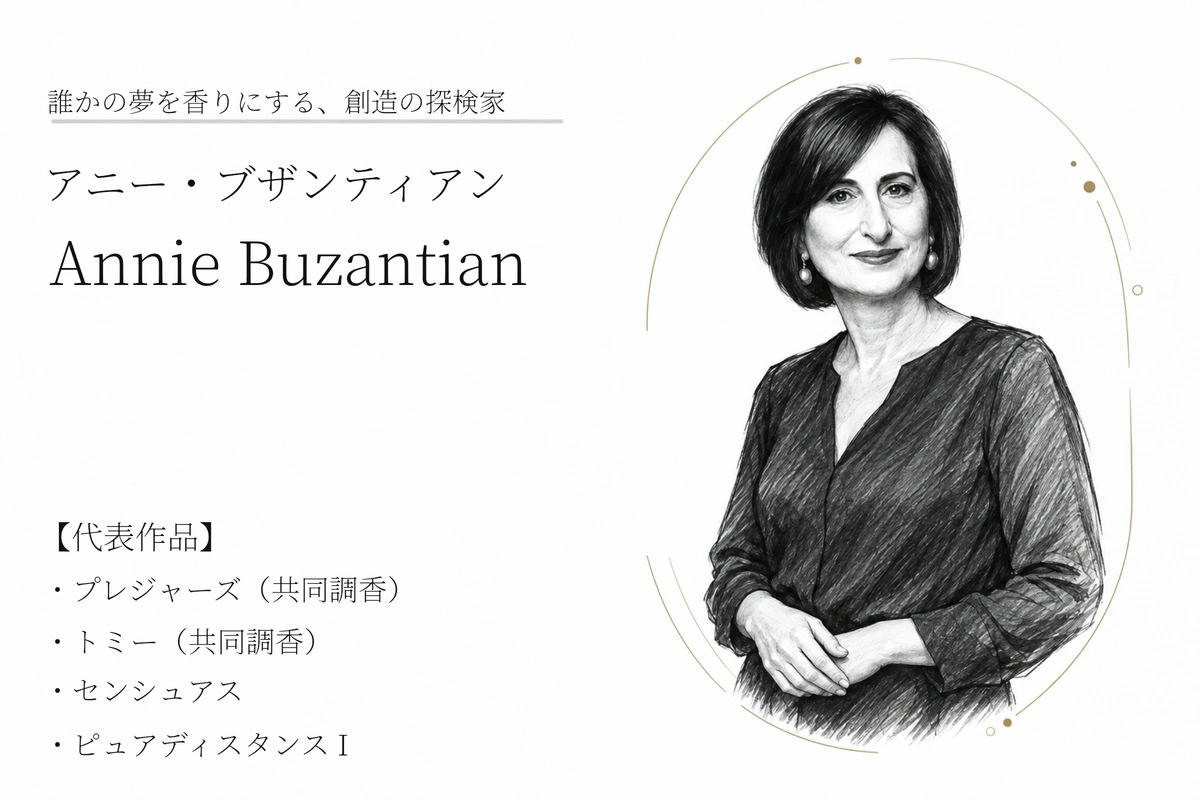
Scent Memories and Early Life
Ralf Schwieger was born in 1962 near a forest in rural Westphalia, Germany. With abundant rainfall, very cold winters and greenery all around in this region, Schwieger names mossy, woody and green notes as favorite scents. Food aromas often come to mind in memories of childhood smells, but there are also more abstract scent memories, such as trying to discover the taste of snow falling onto trees. In an interview, Schwieger also said that the impression of Schwieger’s mother wearing Arpège (Lanvin, 1927, André Fraysse & Paul Vacher) remained etched in memory.
As a teenager, Schwieger’s curiosity about scent was such that, following a popular book, Schwieger made cosmetics at home and somehow managed, while still a child, to order rose oil and orange-flower water to create fragrances.
When choosing a course of further study, Schwieger could not decide between science and art, or what to study at all. Ultimately, after studying fragrance chemistry in Berlin, Schwieger wanted to express something through art rather than research and decided, at the age of 30 in 1992, to leave Berlin and enroll at Roure’s perfumery school in Grasse.
Schwieger sums up the attraction of perfume in a few words: “because there is mystery”. Why does it smell this way? What are we smelling? How do we respond to a scent…?
The mystery and appeal of perfume lie in the emotional connection experienced by the person wearing it.
Ralf Schwieger
From the Success of Baby Doll to Being in Demand Today
The first success was Baby Doll (YSL, 1999), created in collaboration with Cécile Matton, a close friend since perfumery school who was like an older sister. Schwieger has also stated that the Baby Doll bottle design is one of the favorites among all the perfumes Schwieger has created.
After Schwieger’s talent was recognized in a competition, Lipstick Rose was released by Frédéric Malle in 2000. Further successes followed with Marc Jacobs for Men in 2002 and Eau des Merveilles for Hermès in 2004, a perfume expressing femininity without using any florals. More recently, Schwieger has been much in demand among renowned niche fragrance brands such as Atelier Cologne, État Libre d’Orange and BDK Parfums.
In the perfumery world, Schwieger is said to “approach perfume as though playing with building blocks or construction toys,” describing a style that is “partly intellectual, yet always playful.” Interestingly, Schwieger says that even insects can be a source of inspiration.
A beautiful perfume must contain something startlingly new, but it must also be easy to understand.
Ralf Schwieger
Currently living in New York and working at Mane, Schwieger names Edmond Roudnitska and Germaine Cellier, the perfumer who created Fracas for Robert Piguet, as the most inspiring perfumers. The words above are also reminiscent of Roudnitska.
Incidentally…
• Favorite food → Asian cuisine, especially Japanese food (but not sushi).
• Favorite artist → Pina Bausch (1940–2009, German choreographer).
• Favorite perfumes → Chypre fragrances. Eau d’Hermès (1951, Edmond Roudnitska), No. 19 (1970, Henri Robert) and Cologne Bigarade (2001, Jean-Claude Ellena).
• First perfume purchased → Eau d’Hadrien by Annick Goutal.