“If I had listened every time someone had told me I couldn’t do something, I wouldn’t be standing here.”
(“If I had listened whenever someone told me I couldn’t do something, I would not be standing here today.”)
— Jo Malone
- Essential Information
- The Founder and the Brand’s Origins
- The Girl from a Council House
- Meeting Madame Lubatti
- A Family Crisis: The Girl Becomes the Adult
- Discoveries in a Flower Shop and a Turning Point
- Nutmeg & Ginger: Where It All Began
- 154 Walton Street: The Birth of a Brand
- Lime Basil & Mandarin: The Birth of a Legendary Scent
- Entering New York: The “Empty Bag” Strategy
- The Sale to Estée Lauder, and the Eventual Farewell
- Cancer and the Loss of Her Sense of Smell
- After Jo: The Brand’s “Second Chapter”
- The Brand’s Distinctive Commitments
- The Fragrance Range
- Incidentally…
Essential Information
- Brand name: Jo Malone London
- Founded: 1994, when the first London shop opened; the business itself began around 1990
- Founder: Joanne Lesley Malone CBE, commonly known as Jo Malone
- Parent company: The Estée Lauder Companies, since 1999
- Official websites: jomalone.com (Japanese website: jomalone.jp)
Note: The brand name is pronounced “Jo Malone London.” Although the founder’s full given name is Joanne, she is commonly known as Jo.
The Founder and the Brand’s Origins
The Girl from a Council House
Jo Malone was born on November 5, 1963, in a council house in Bexleyheath, southeast London. Her father Andy was a painter with a gambling habit, while her mother Eileen worked as a beautician. The family’s finances were always precarious, forcing Jo into the adult world from an early age.
“From the age of 11, I was essentially the adult, asking: ‘Do we have enough money for the electric and gas meter?’ I understood that if he spent all the money gambling, we wouldn’t have food.”
(“By the age of eleven, I was already the adult in the family, the one asking, ‘Do we have enough money for the electricity and gas meters?’ I knew that if my father gambled it all away, there would be no food.”)
— Jo Malone, in an interview with CNBC
On winter mornings, scraping ice from the window of her unheated room with her finger, the young girl quietly made a resolution.
“I remember scraping the ice with my finger and looking out and thinking, ‘I’ve got to change my destiny.'”
(“I remember scraping the ice off the window with my finger, looking out and thinking, ‘I have to change my destiny.’”)
— Jo Malone
Meeting Madame Lubatti
Jo’s mother Hélène worked for an eccentric woman known as Madame Lubatti, also called Countess Lubatti in other sources, at a private skincare clinic in London’s Montagu Mansions district. From the age of eight, Jo visited the clinic and learned by watching Madame Lubatti give facials and make fragrances. By nine, she was reportedly grating sandalwood (in Japanese) and straining juniper in the kitchen.
“I learn fast and quickly. I’m never frightened to say I don’t know how to do something. Teach me, and then I master it very quickly and move on.”
(“I learn quickly. I’m not afraid to say, ‘I don’t know.’ If someone teaches me, I soon master it and move on.”)
— Jo Malone, in an interview with ABC News
Living with severe dyslexia, a reading and writing difficulty, she could not read the labels on bottles, but could distinguish rose from sandalwood the instant she opened them. She later described her sense of smell by saying, “My nose is my paintbrush.”
When Madame Lubatti died in 1974, Jo’s mother took over the clinic. Jo supported her as her “number two,” sterilizing equipment, cleaning the refrigerator and preparing products.
A Family Crisis: The Girl Becomes the Adult
Eventually, her father left home and her mother suffered a mental breakdown, described in some sources as a stroke. Jo left school at around thirteen and began a life of caring for her younger sister, preparing products in the morning, taking her sister to school, selling the clinic’s products and making dinner. On weekends she sold her father’s paintings to raise money for groceries. Drawing on her mother’s knowledge, she also took homemade face creams into London and sold them for £4.50 each to support the family.
Discoveries in a Flower Shop and a Turning Point
After her mother recovered, Jo began working at a delicatessen and flower shop on Elizabeth Street run by British businessman Justin de Blank. Working with flowers made her realize that she possessed an extraordinary sense of smell. She could reportedly identify the faintest ingredient in any perfume, and even tell how many days a bouquet of cut flowers had been kept in a refrigerator.
At eighteen she began attending Bible school, where she met her future husband, Gary Wilcox. They married a few years later.
Nutmeg & Ginger: Where It All Began
In her mid-twenties, carrying roughly £30,000 of debt inherited from her mother’s business, Jo began offering mobile facial treatments, taking a massage bed from door to door across London. She turned her home kitchen into a “laboratory,” blending handmade skincare products and bath oils.
One particularly successful creation was her Nutmeg & Ginger bath oil. Originally made as a thank-you gift for twenty facial clients, it so delighted one customer that she ordered a hundred bottles for the table settings at a party. Every one of the party’s eighty-six guests contacted Jo to order more. Her clientele grew entirely by word of mouth, eventually including Sarah Ferguson, Duchess of York, as well as other royals, film stars and models.
“Word-of-mouth, no advertising. It was just me. I was the receptionist, I was the facialist, I was the chemist, and I was the bookkeeper. You name it.”
(“No advertising at all. Just word of mouth. Everything was me alone: receptionist, facialist, formulator, bookkeeper, everything.”)
— Jo Malone
154 Walton Street: The Birth of a Brand
When products filled the house so completely that there was literally nowhere to put a foot, Gary left his job as a surveyor to become Jo’s business manager. His business sense combined with her creativity to drive rapid growth.
In 1994, the couple opened their first Jo Malone London shop at 154 Walton Street, London. On opening day, a man walked in and offered to buy the business for £1 million. Jo turned him down.
The shop reached its five-year sales target in just six months, and sales reached $1 million after eighteen months.
Lime Basil & Mandarin: The Birth of a Legendary Scent
The first “proper fragrance” Jo brought to market was Lime Basil & Mandarin. With no formal fragrance training, she sought help from her oil supplier, Lautier Florasynth, and completed the scent in collaboration with its in-house perfumer, Lucien Piguet.
“I would find a note I really loved, and [the inspiration for] Lime Basil & Mandarin was just this one note that reminded me of those lime sweets that you sucked. And I’d been to a little Italian restaurant and had pesto for the very first time. I couldn’t believe the explosion of basil. Then I put the two notes together. It’s just how my mind plays with notes.”
(“I find a note I love. Lime Basil & Mandarin began with a note that reminded me of lime-flavored sweets I sucked as a child. Then I tried pesto for the first time in a little Italian restaurant. I couldn’t believe the impact of the basil. I tried putting the two notes together. That is how notes are always playing around in my mind.”)
— Jo Malone, in an interview with Racked
The fragrance quickly acquired a cult following, bringing a breath of fresh air in the form of a transparent cologne to the 1990s, when powerful perfumes were in their heyday.
Entering New York: The “Empty Bag” Strategy
Seeking to expand overseas, Jo and Gary decided to open a concession at Bergdorf Goodman on New York’s Fifth Avenue. But their marketing budget was almost nonexistent. As they sat despondently in their hotel room, worrying that they might fail, Gary came up with the “empty bag” strategy.
They asked fifty acquaintances to carry Jo Malone-branded paper bags, with nothing inside, while walking around fashionable New York neighborhoods. Jo asked her husband, “What’s the point of an empty bag?” Gary calmly replied:
“Well, no one else knows.”
(“Other people don’t know they’re empty.”)
— Gary Wilcox
The bags began to register with trend-conscious New Yorkers, and when the shop opened, many customers apparently assumed there had already been a store somewhere. Retelling the story, Jo proudly calls it “not deception, but a unique use of creativity.”
Another decisive breakthrough in America came with an appearance on The Oprah Winfrey Show. The program rapidly raised her profile in the US market and brought her to Estée Lauder’s attention.
The Sale to Estée Lauder, and the Eventual Farewell
In 1999, Jo sold Jo Malone London to The Estée Lauder Companies. The amount was not disclosed, but was reported to be a multimillion-pound deal. Jo had three requirements for the sale.
“I wanted money in pockets, I needed funding. I needed distribution, so I needed somebody who understood the rest of the world. But more importantly I needed heart, I needed somebody who really understood me.”
(“I needed money in my pockets. Funding. Distribution, a partner who understood the world. But most important was ‘heart’: someone who really understood me.”)
— Jo Malone
A breakfast with Leonard Lauder began a process of “courtship” that led to the deal. Jo stayed on as creative director and continued creating for the brand.
Cancer and the Loss of Her Sense of Smell
In 2003, Jo was diagnosed with an aggressive form of breast cancer. She was thirty-eight.
“I was given nine months to live. I was 38 years old, and it was the biggest shock. I thought older people got breast cancer.”
(“I was told I had nine months to live. I was thirty-eight, and it was the biggest shock of my life, because I thought breast cancer happened to older people.”)
— Jo Malone
She first called Evelyn Lauder, a member of the family that co-founded Estée Lauder, who told her: “You’re not going to die, Jo. We’re going to get you through this.” (“We won’t let you die, Jo. We will save you.”) The next day, she flew to New York for treatment at Memorial Sloan Kettering Cancer Center.
She underwent grueling chemotherapy every five to six days for around eighteen months. Cruelest of all, the treatment caused her to lose her sense of smell. Everything tasted and smelled metallic, and for around nine months she could no longer distinguish any scents.
“I lost my identity. I lost because…”
(“I lost my identity, because my sense of smell was my means of communication and my very way of seeing the world.”)
— Jo Malone, in an interview on This Morning
Although she survived cancer, Jo felt like a different person from the woman she had been, and in 2006 she decided to leave Jo Malone London, entrusting the brand to Estée Lauder’s capable hands. Her sale agreement included a five-year non-compete clause, preventing her from working in either fragrance or skincare.
Ironically, eight weeks after she left Jo Malone London, her sense of smell suddenly returned.
After Jo: The Brand’s “Second Chapter”
Setting Sail Without the Founder Whose Name Remained
Founder Jo Malone left the brand in 2006. Fans around the world wondered what would become of “Jo Malone London without Jo.” Yet under The Estée Lauder Companies, the brand did more than simply survive: it evolved, quietly but powerfully.
At the center of that evolution was Céline Roux.
Céline Roux: The “Perfumer’s Coach” from France
Céline Roux comes from Marseille in southern France. Her grandfather supplied flowers and spices to fragrance manufacturers in Grasse, the perfume capital of southern France, so the world of scent was, in a sense, in her blood.
Her career began in New York, where she joined product development at The Estée Lauder Companies and gained experience in makeup innovation. After a similar role at a major French luxury house in Paris, she moved to London in 2009 to join Jo Malone London’s fragrance development team. For fifteen years or more since then, she has overseen the brand’s scent creation as Global Head of Fragrance, or Vice President, Global Fragrance Development.
Roux does not call herself a perfumer. She describes her role this way:
“I’m not a nose, but I work with noses. I see myself as the perfumer’s coach. I brief them, I feed them with ideas, inspiration.”
(“I am not a ‘nose,’ or perfumer. I work with noses. I think of myself as the perfumers’ coach. I brief them and give them ideas and inspiration.”)
— Céline Roux, in an interview with W Magazine
One of Roux’s consistent priorities is to let the perfumers she commissions experience Britain for themselves. Most perfumers who create fragrances for Jo Malone London are French, but she brings them to London for each project so that they can breathe in the British atmosphere.
“It’s very important, especially for an English brand, that they understand England. I’m French, but I live in London. I couldn’t do my job if I lived in New York. It’s essential that they live and breathe the Brits to understand and get inspired.”
(“For a British brand, it is very important that perfumers understand Britain. I am French, but I live in London. I could not do this job if I lived in New York. It is essential that they breathe the British air and absorb the British sensibility.”)
— Céline Roux
Interestingly, Roux acknowledges that an outsider’s eye can sometimes reveal charms that British people themselves overlook. The supreme example was Wood Sage & Sea Salt, which would become a global hit.
“If I were English, I don’t think I’d like to do a fragrance based on the English coast because it’s not glamorous the way other beaches are. But when I went there, I was just transported. I thought, this is fantastic! When I tell the English that’s what inspired us, they say it smells like their childhood – but I don’t think they would have said, ‘Yes! Make a fragrance of that!'”
(“If I were British, I probably would not have thought of creating a fragrance around the English coast, because it is not as glamorous as other beaches. But when I went there, it captured my heart. I thought, ‘This is wonderful!’ When I tell British people that it inspired us, they say, ‘It smells like childhood.’ But I don’t think they themselves would ever have said, ‘Yes, let’s make a perfume from this coast!’”)
— Céline Roux
Christine Nagel: The Master Perfumer Behind Forty-Seven Scents
When Roux arrived in 2009, the perfumer at the heart of Jo Malone London’s fragrance development was Geneva-born Christine Nagel. Originally drawn into perfumery by her fascination with raw materials in the R&D laboratory at Firmenich (in Japanese), Nagel began working for Jo Malone London after creating major successes including Narciso Rodriguez For Her, co-created with Francis Kurkdjian in 2003, and Miss Dior Chérie in 2005.
Nagel created a remarkable forty-seven fragrances for Jo Malone London. They include Oud & Bergamot, one of the founding Cologne Intense fragrances, and 2014’s Wood Sage & Sea Salt (in Japanese), her final major project for the brand. Wood Sage & Sea Salt was honored as the “most daring fragrance” at the 2015 Marie Claire International Fragrance Awards.
Nagel herself has an aesthetic preference for stripping compositions back to simplicity, which resonated deeply with Jo Malone London’s philosophy of achieving transparency through fewer materials.
“I have a creative preference for compositions characterised by simplicity.”
(“I have a creative preference for compositions characterized by simplicity.”)
— Christine Nagel
In 2014, Nagel moved to Hermès and became its in-house perfumer as the successor to Jean-Claude Ellena (in Japanese).
English Pear & Freesia: Roux’s “First Project”
The first fragrance Céline Roux worked on after joining Jo Malone London in 2009 was English Pear & Freesia, released in 2010.
“English Pear & Freesia was actually the first fragrance I worked on when I joined Jo Malone London, so it has a special place in my heart. I had just moved to London from New York during the fragrance development and suddenly found myself in a different city discovering English gardens and Romantic poets.”
(“English Pear & Freesia was the first scent I worked on after joining Jo Malone London, so it has a special place in my heart. I had just moved from New York to London and suddenly found myself discovering English gardens and Romantic poets in a different city.”)
— Céline Roux
Inspired by the British poet John Keats’s “To Autumn,” the scent captured an orchard at the transition from summer to autumn, when ripe King William pears, a traditional British variety, hang on the trees and white freesias bloom. With a fruity, juicy pear top note, cool freesia and a warm base of amber and patchouli, the composition has also been described as a “modern chypre.”
Fifteen years or more after its launch, English Pear & Freesia remains one of Jo Malone London’s signature fragrances. In 2024, it gained a sister scent, English Pear & Sweet Pea.
Expanding Cologne Intense: Fragrances That Travel the World
The Cologne Intense collection, which began in Nagel’s era with inspiration from the Middle East, expanded further under Roux. From Namibia’s desert, in Myrrh & Tonka, to India’s flower markets, in Jasmine Sambac & Marigold, and the Hanging Gardens of ancient Babylon, in Velvet Rose & Oud, she drew stories from local cultures and rituals to build a collection of ten or more fragrances.
“Yes, we are a British brand inspired by Englishness. But we travel. And this has allowed us to have ‘olfactive diversity’.”
(“Yes, we are a British brand inspired by Britishness. But we travel, and that has brought us ‘olfactory diversity.’”)
— Céline Roux
Released in 2016, Myrrh & Tonka was created by MANE perfumer Mathilde Bijaoui. This rich oriental fragrance took inspiration from Namibia’s dunes and red earth, and from the beauty ritual in which Namibian women apply myrrh resin and red soil to their skin.
“The idea of Namibia, with its sand dunes and warm desert colours, conjured up the romance and emotion of faraway lands. Myrrh felt like the perfect note to use for a new and innovative Cologne Intense.”
(“The idea of Namibia, its dunes and warm desert colors, evoked the romance and emotion of distant lands. I felt that myrrh was the perfect note for a new and innovative Cologne Intense.”)
— Céline Roux
In 2024, Orris & Sandalwood joined the collection, drawing inspiration for the first time from beyond the Middle East, in the hills of Tuscany. Co-developed with perfumer Pierre Négrin, it expresses the dual nature of iris root, or orris, cultivated by monks for centuries: woody yet powdery, floral yet deep.
An Ensemble of Master Perfumers
After Nagel’s departure, Jo Malone London established a “creative studio” approach in which Roux works closely with several master perfumers, rather than relying on a single in-house perfumer. The principal perfumers and some of their representative creations are listed below.
Roux is deeply involved from each project’s initial conception, repeatedly communicating Jo Malone London’s DNA to the perfumers: simplicity, a passion for contrasts, and the premise of scent pairing. This is why the brand’s distinctive identity remains consistent even when the perfumer changes.
“I spend so much time explaining the Jo Malone DNA to them. If I had to explain that every single time to a new perfumer, I don’t think I’d ever get any work done!”
(“I spend an enormous amount of time explaining Jo Malone’s DNA to the perfumers. If I had to explain it from scratch to a new perfumer every time, I would never get any work done!”)
— Céline Roux
The Brand’s Distinctive Commitments
Fragrance Combining: The Revolution of Layering Scents
Jo Malone London’s most distinctive philosophy is the concept of Fragrance Combining™, later also called Scent Pairing. Rather than enjoying a single fragrance alone, it involves layering several colognes to create a scent of one’s own. The idea had long existed in the Middle East, but Jo Malone London popularized it widely in Western markets.
“The personalisation that Scent Pairing allows is at the heart of everything we do. It’s central to the thought process from the very start and means that the way we develop our fragrances is truly unique.”
(“The personalization that Scent Pairing brings is at the core of everything we do. It is central to our thinking from the outset, and that makes our approach to fragrance development completely unique.”)
— Céline Roux, Jo Malone London Global Head of Fragrance
The Philosophy of Fewer Materials and Greater Clarity
An ordinary perfume may contain as many as four hundred raw materials, whereas Jo Malone London colognes contain far fewer ingredients. This is both because they are designed for layering and because it allows the quality of each individual material to stand out.
“As you can imagine, the more ingredients you have the less clarity you have. It would be the same with cooking – if you add a lot of spices, it becomes difficult to detect what’s actually in the dish.”
(“The more ingredients there are, the less clarity you have. It’s like cooking: if you add too many spices, you can no longer tell what is in the dish.”)
— Céline Roux
As a result, many fragrances have simple names that directly identify their key notes, such as Lime Basil & Mandarin, English Pear & Freesia, and Wood Sage & Sea Salt.
Bottles and Packaging: Cream Boxes and Black Grosgrain Ribbon
Jo Malone London’s packaging embodies its identity. A cream-colored box is tied with black grosgrain ribbon. Inside, the contents are wrapped in black tissue paper carrying a faint trace of the signature Lime Basil & Mandarin fragrance.
Grosgrain ribbon has fine horizontal ribs on its surface. In contrast to satin’s smoothness, its slightly rough texture combines a structured firmness with elegance. The cream color, neither stark white nor beige, conveys warmth and calm, while its strong contrast with the black lettering combines legibility with sophistication.
This minimalist, pared-back design sets it apart from lavishly decorated luxury brands and speaks to Jo Malone London’s pioneering role in “quiet luxury.”
British Heritage
Jo Malone London has consistently drawn inspiration from British landscapes and culture. Bluebells, King William pears, oak trees and lavender, materials emblematic of English countryside and gardens, are deeply rooted in the brand’s DNA.
“Whether it’s picturesque villages, rolling hills, and windswept beaches, or the latest in art, culture and design, we’re inspired by the best of British.”
(“Picturesque villages, rolling hills, windswept beaches, or the forefront of art and culture: we take inspiration from ‘the very best of Britain.’”)
— Jo Malone London official website
The Fragrance Range
Cologne: The Heart of the Brand
The regular Cologne line is the foundation of Jo Malone London. Its fragrances are transparent, light and versatile enough to be worn regardless of gender. Each is designed not only to smell beautiful on its own, but also for Scent Pairing with other colognes.
Jo Malone London’s collection of scents is divided broadly into six fragrance families.
| Family | Characteristics | Representative fragrances |
|---|---|---|
| Citrus | Fresh, energetic citrus scents | Grapefruit; Lime Basil & Mandarin |
| Fruity | The juicy sweetness of fruit | English Pear & Freesia; Nectarine Blossom & Honey |
| Light & Floral | Delicate, dewy flowers | Wild Bluebell; Red Roses; Poppy & Barley |
| Rich & Floral | Radiant, full-bodied floral scents | Peony & Blush Suede; Orange Blossom; Tuberose Angelica |
| Fresh & Woody | Fresh woods and herbs | Wood Sage & Sea Salt; English Oak & Hazelnut |
| Warm & Woody | Deep, warm woods | Myrrh & Tonka; Pomegranate Noir; Oud & Bergamot |
Cologne Intense: A Deeper Journey
Introduced in 2010, Cologne Intense is a series that is deeper and richer than the regular line and makes generous use of rare materials. Perfumer Christine Nagel’s first three creations, Rose Water & Vanilla, Oud & Bergamot, and Iris & White Musk, came in smoky bottles and brought new depth to the brand.
“Most of the scents we create are quintessentially British and find inspiration in British landscapes, traditions and ingredients. But with Cologne Intense we allow ourselves to find inspiration from trips we have taken and ingredients we have discovered from further afield.”
(“Most of our scents are typically British, inspired by British landscapes, traditions and materials. But with Cologne Intense, we allow ourselves to draw inspiration from materials discovered on our travels and from places further afield.”)
— Céline Roux
The current range includes Hinoki & Cedarwood, Dark Amber & Ginger Lily, Scarlet Poppy, Myrrh & Tonka, and Amber Labdanum. (Cologne Intense collection)
Night Collection and Lavenderland: Into New Territory
In recent years, Roux has also been keen to develop new categories beyond the established Cologne and Cologne Intense lines.
The Night Collection takes inspiration from the in-between hours after dusk and before sleep. Created by Mathilde Bijaoui and Marie Salamagne, it features scents such as Lavender & Moonflower and Moonlit Camomile, designed with a calming effect in mind.
“The Night Collection isn’t so much about sleep, but rather about enjoying the time before sleep, which is a fascinating area to explore, inspiring new rituals and new olfactive expressions.”
(“The Night Collection is less about sleep than enjoying the time before it. It is a fascinating area to explore, inspiring new rituals and olfactory expressions.”)
— Mathilde Bijaoui
The Lavenderland collection took an experimental approach, entrusting one material, lavender, to three perfumers. Marie Salamagne created the floral-leaning Wisteria & Lavender, Yann Vasnier the woody, sexy Silver Birch & Lavender, and Anne Flipo the aromatic oriental Lavender & Coriander. This method, in which three different interpretations emerge from the same starting point, vividly illustrates Roux’s skill as a “coach.”
“Lavender was the starting point for each of the perfumers; after that they could do what they wanted because they understand our passion for contrasts. The result is very special.”
(“Lavender was the shared starting point for each perfumer. Beyond that, I gave them freedom, because they understand our passion for contrasts. The result was something very special.”)
— Céline Roux
In this way, Jo Malone London quietly but surely changed from a brand dependent on the individual genius of its founder into one that continues to evolve through the collective intelligence of a creative team with Roux at its center. While retaining the founder’s spirit, the addition of talented perfumers’ visions from around the world has expanded its expressive range far beyond what it was at the beginning.
Incidentally…
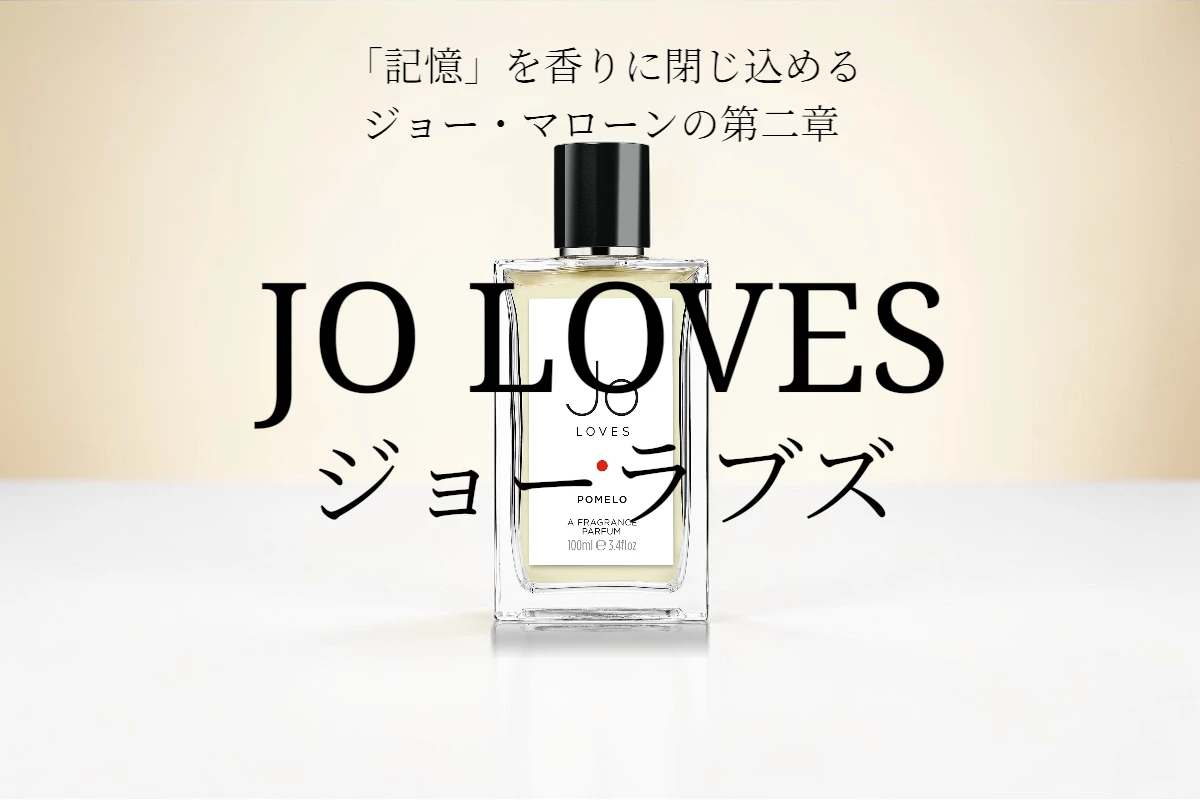
- “Two billion-dollar brands.” Jo Malone describes both Jo Malone London and Jo Loves, the new brand she founded in 2011, as “billion-dollar brands.” Jo Loves’ first fragrance, Pomelo, was born at the moment she rediscovered her heart on Parrot Cay in the Caribbean.
- The rights to her name. Jo’s only regret is that, when selling to Estée Lauder, she also relinquished the right to use her own name, “Jo Malone.” In subsequent ventures, such as Jo Loves and Jo Vodka, she has used only her first name, Jo.
- Jo Vodka. In 2025, Jo moved beyond fragrance into the alcohol industry, launching the fusion vodka brand Jo Vodka with three varieties: 101 The Purist, 102 The Bohemian, and 103 The Artist.
- Dyslexia and synesthesia. Paradoxically, Jo’s dyslexia may have sharpened her olfactory talent. She has an ability resembling synesthesia, perceiving scents as colors, and says that she “can create a perfume from a pink cushion.”
- From MBE to CBE. She was appointed MBE, the fifth class of the Order of the British Empire, in 2008, and CBE, its third class, in 2018. The CBE recognized her contributions to the British economy and the GREAT Britain campaign.
- Christine Nagel’s next chapter. After creating forty-seven fragrances for Jo Malone London, the master perfumer moved to Hermès, becoming its in-house perfumer as the successor to Jean-Claude Ellena (in Japanese).
- She became her family’s sole breadwinner at 11 — now she’s a world-famous perfume entrepreneur – https://www.cnbc.com/2025/11/15/from-family-breadwinner-at-11-to-world-famous-perfume-entrepreneur.html
- Ms. Jo Malone CBE on resilience, reinvention (CNBC Executive Decisions podcast) – https://www.cnbc.com/video/2025/11/11/ms-jo-malone-cbe-executive-decisions-podcast.html
- Jo Malone on finding your calling (ABC News / Good Morning America) – https://www.goodmorningamerica.com/gma/story/jo-malone-finding-calling-great-advice-oprah-57913762
- The Queen of Fragrance Is Back With a New Brand (Racked, 2016) – https://web.archive.org/web/20181004022150/http:/www.racked.com/2016/12/12/13883836/jo-malone-jo-loves-fragrance-candles
- How Jo Malone launched in the US with empty bags (Cheltenham Literature Festival) – https://www.hotfootdesign.co.uk/thoughts/launching-us-just-empty-bag/
- Fragrance Maven Jo Malone Lost Her Sense of Smell (SurvivorNet) – https://www.survivornet.com/articles/jo-malone-lost-sense-of-smell-breast-cancer-battle/
- Jo Malone uncovers the reasons she sold Jo Malone London (Female First) – https://www.femalefirst.co.uk/lifestyle-fashion/stylenews/malone-uncovers-reasons-sold-malone-london-1062172.html
- Jo Malone CBE’s only regret is selling her name (CNBC) – https://www.cnbc.com/2025/11/23/this-famous-perfume-entrepreneurs-only-regret-is-selling-her-name.html
- Lime Basil & Mandarin by Jo Malone (Stephan Matthews) – https://www.stephanmatthews.com/2017/10/lime-basil-mandarin-by-jo-malone.html
- Jo Malone London – The Perfume Society – https://perfumesociety.org/perfume-house/jo-malone/
- Jo Malone Wood Sage & Sea Salt review (Cafleurebon) – https://cafleurebon.com/new-fragrance-review-jo-malone-sage-wood-sea-salt-cologne-christine-nagels-british-beach-draw/
- Jo Malone unveils Wood Sage & Sea Salt (Tatler Asia) – https://www.tatlerasia.com/style/beauty/jo-malone-wood-reveals-sage-sea-salt-fragrance
- The Untold Story of Jo Malone London (YouTube) – https://www.youtube.com/watch?v=5L-eyOpSDhE
- Queen Of Scent Jo Malone (This Morning / ITV) – https://www.youtube.com/watch?v=AVWwuqhiBqM
- “I lost my sense of smell”: Jo Malone CBE (YouTube) – https://www.youtube.com/watch?v=n1X7GsBt7NQ
- Jo Loves Founder on Changing the World with Fragrance (Scentbird) – https://www.youtube.com/watch?v=AWWA6TP5QHM
- The Real Story of Jo Malone CBE (Exhibit A podcast) – https://www.youtube.com/watch?v=NRtPt8SlD0k
- How Jo Malone Has Smelled the Sweet Scent of Success (LinkedIn) – https://www.linkedin.com/pulse/how-jo-malone-has-smelled-sweet-scent-success-twice-bill-ellis
- Jo Malone London official website – https://www.jomalone.com
- Jo Malone London UK: Philosophy of Scent Pairing – https://www.jomalone.co.uk/our-stories/philosophy-of-scent-pairing
- What Makes Jo Malone Perfume Packaging Recognizable (Gentlever) – https://gentlever.com/what-makes-jo-malone-perfume-packaging-recognizable/
- The Story Behind Jo Malone London’s Newest Fragrance (W Magazine, 2016) – https://www.wmagazine.com/story/jo-malone-celine-roux-beauty-insiders
- Meet Celine Roux, the fragrance artist (V Beauty, 2017) – https://www.vbeauty.co/blog/2017/8/3/meet-celine-roux-the-fragrance-artist
- Celine Roux – The Fragrance Foundation UK – https://www.fragrancefoundation.org.uk/celine-roux
- ITW de parfumeur : Jo Malone London (Paris 8) – https://www.paris8.lu/fr/interview-de-parfumeur-jo-malone-london/
- Maintaining the Essence of Jo Malone London (GCI Magazine) – https://www.gcimagazine.com/brands-products/fragrance-home/article/21849027/maintaining-the-essence-of-jo-malone-london
- Christine Nagel – Wikipedia – https://en.wikipedia.org/wiki/Christine_Nagel
- Christine Nagel – The Perfume Society – https://perfumesociety.org/perfume-nose/christine-nagel/
- Christine Nagel – Parfumo – https://www.parfumo.com/Perfumers/Christine_Nagel
- English Pear & Freesia: Céline Roux discusses (Jo Malone London UK) – https://www.jomalone.co.uk/our-stories/celine-roux-forever-favourite
- An Ode to English Pear & Freesia (Jo Malone London) – https://www.jomalone.com/our-stories/an-ode-to-english-pear-freesia
- The untold story of Jo Malone London’s English Pear & Freesia (Cosmetics Business) – https://cosmeticsbusiness.com/the-story-of-jo-malone-londons-english-pear-freesia-cologne
- Intense Travel Tales (Jo Malone London UK) – https://www.jomalone.co.uk/our-stories/intense-travel-tales
- Myrrh & Tonka Cologne Intense interview (AE Magazine) – https://aeworld.com/beauty/myrrh-tonka-cologne-intense/
- Cologne Intense: A Treasured Story (Jo Malone London) – https://www.jomalone.com/our-stories/cologne-intense-a-treasured-story
- Jo Malone adds Orris & Sandalwood to Cologne Intense (Moodie Davitt Report) – https://moodiedavittreport.com/jo-malone-adds-orris-sandalwood-to-cologne-intense-collection/
- Brilliant Blossoms collection (Jo Malone London) – https://www.jomalone.com/our-stories/brilliant-blossoms
- Lavenderland Perfumer Interview (Jo Malone London UK) – https://www.jomalone.co.uk/our-stories/perfumer-interview-lavender
- Night Collection Q&A (Jo Malone London) – https://www.jomalone.com/our-stories/night-collection
- The Story of English Pear & Sweet Pea (Jo Malone London) – https://www.jomalone.com/our-stories/english-pear-and-sweet-pea
- Mathilde Bijaoui – Agoratopia – https://www.agoratopia.com/perfumers/mathilde-bijaoui
- An olfactory trip with Celine Roux (Mecca, 2018) – https://www.mecca.com/en-au/mecca-memo/fragrance/jo-malone-celine-roux-interview/
- Jo Malone London – Wikipedia – https://en.wikipedia.org/wiki/Jo_Malone_London