Ingredient Guide
Iris has two sides to its scent. It is damp and cold, yet also very soft and enveloping.
The plant known in English as iris is also called iris or orris, and belongs to the iris family, Iridaceae.
Etymology and Types of Iris
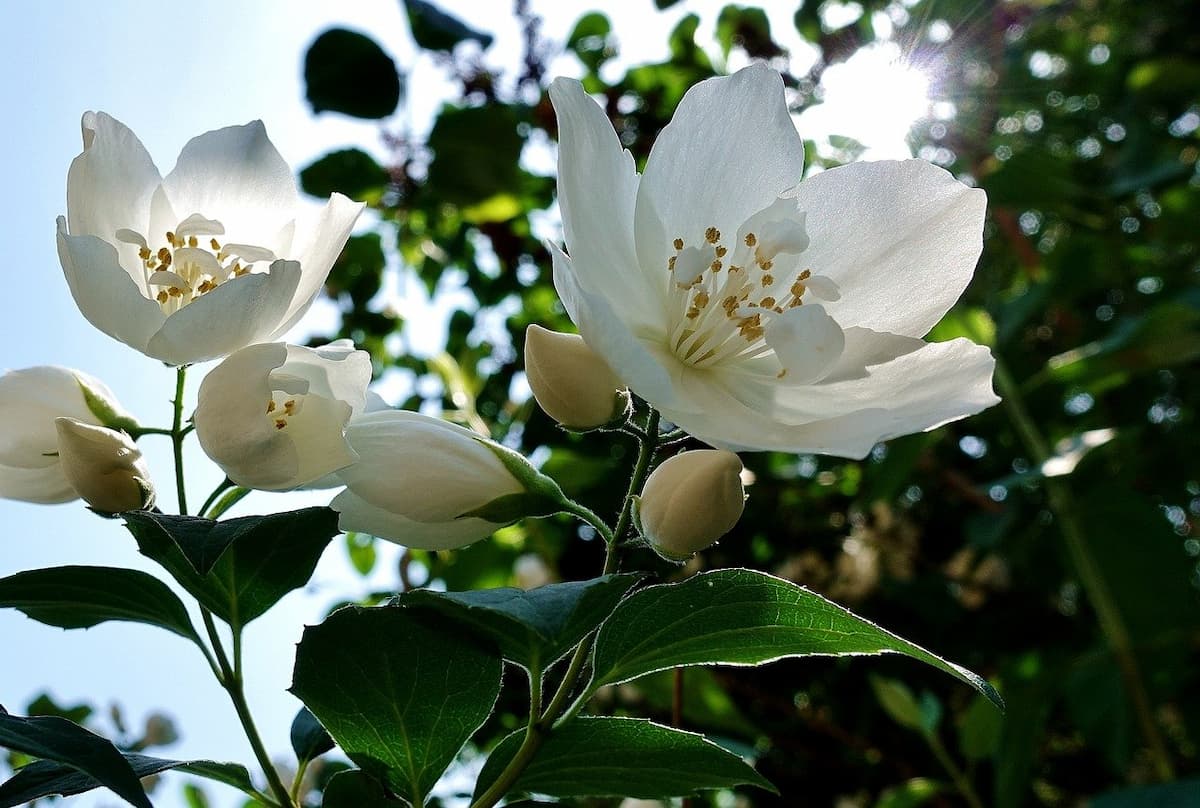
Iris, the goddess of the rainbow, had wings of brilliantly colored feathers. She served Zeus as a messenger carrying the words of the gods to human beings, linking earth and sky. She was said to leave a rainbow behind when she flew, and this flower, which comes in many colors depending on its type, was named Iris, meaning “rainbow” in Greek.
For this reason, German iris is also known as the “rainbow flower.” In the language of flowers, irises in general mean a “message (of love).”
The irises used especially for fragrance are Iris pallida, Iris germanica, and Iris Florentine.
Iris pallida

Also known as sweet iris or Dalmatian iris, Iris pallida bears five to nine petals ranging from pale purple to off-white. It is cultivated not only in Italy and France, but also in China’s Yunnan region.
Of the aromatic compound (Japanese glossary) irone (Japanese article) found in the root (rhizome), 60% is γ-irone and 40% is α-irone. Irone is the most abundant aromatic constituent in iris. Its chemical structure is very close to that of violet’s (Japanese article) most abundant aromatic constituent, ionone (Japanese article), so its scent combines a violet-like floral character with woodiness, fattiness, and a fruity quality reminiscent of raspberry or cocoa. The quantity of irone causes slight differences in the scent of the extract.
Iris germanica

Known as German iris or the rainbow flower, this iris is grown mainly in Morocco and Turkey. It bears four purple or white petals. Of the irone aromatic compounds in its roots, 60% is α-irone and 40% is γ-irone.
Iris florentina

The white-flowered form of German iris is known as Iris florentina, or Florentine iris. This is the type commonly called nioi-ayame in Japanese.
Florentina means “from Florence,” where iris was originally used to scent clothing.
It is also famous for having been used in the early sixteenth century by Catherine de’ Medici to replace the smell of leather with a pleasant fragrance in Grasse, the center of the tanning industry that she passed through on her way to her betrothal. Thanks to her, Grasse’s fragrance industry flourished, and the city came to be known as the “perfume capital.”
From the mid-nineteenth century, it was replaced by Iris pallida, which has a scent closer to violet and a larger production volume. Nowadays, some people confuse the two and mistakenly call Iris florentina Iris pallida, but they are quite different. Iris florentina is also considered the finest quality of iris.
How Iris Fragrance Material Is Extracted
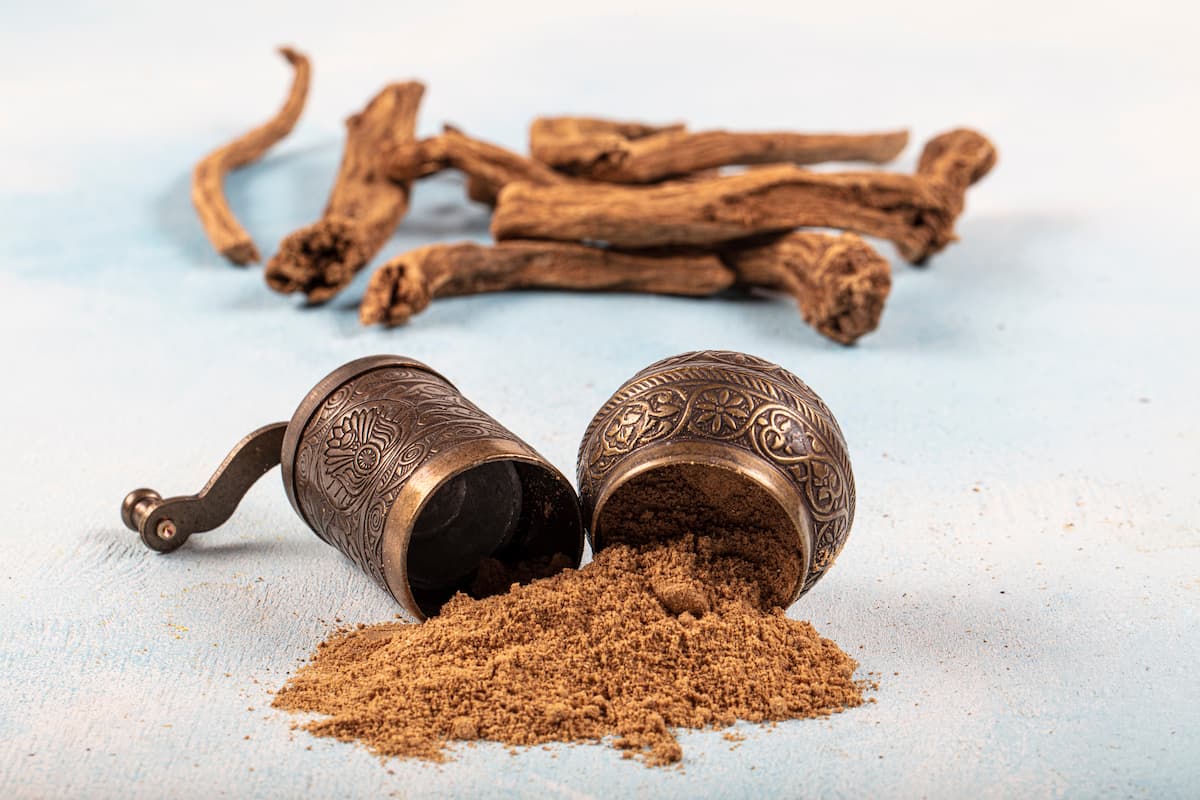
Iris is one of the most expensive fragrance materials. Its essential oil is obtained from the roots, not the flowers.
Harvesting begins about two to three years after planting. The soil in which it is planted has a major influence on quality. Light, dry, stony soil containing a mixture of granite, limestone, and loam is considered ideal. In Grasse, harvesting takes place in September, when humidity is low.
The harvested roots are peeled, washed, and dried. At this stage they have little fragrance and smell rather like potatoes. During peeling, roots that are white inside are judged to be high quality, while black ones are considered ordinary quality and fetch lower prices.

They are then dried and aged in wooden boxes for three to four years to increase the concentration of the aromatic compound irone. Drying reduces 100 kg of roots to 25–30 kg. The dried iris is further graded: dark-colored material with a weak scent is considered lower quality, while lighter-colored material with a stronger scent is considered higher quality.
Extracting the Concrete
After a total of about six or seven years, the rhizomes are ground to a powder and steam-distilled to produce a waxy paste with a powdery, violet-like, woody scent. The yield is only about 0.02%, giving just around 0.2 g per kilogram of rhizomes. Because it is solid at room temperature, it is called orris butter (orris concrete). It contains 18–20% irones and has a slightly earthy scent. It costs around ¥1.5 million per kilogram.
Refining It into an Absolute
The orris concrete is washed with alcohol to remove the waxes, producing an absolute. The yield of absolute from the concrete is about 0.2%, so 10,000 kg of dried rhizomes produces approximately 4 kg of iris absolute.
The irone concentration in the absolute is high, at 60% or more. Compared with the earthy orris butter, the absolute’s high irone concentration gives it an even more powdery scent with chocolate and fruit nuances, and makes it very long-lasting. The finest grades cost more than ¥10 million per kilogram. This low yield explains why they cost several times as much as gold bullion.
It seems that a cheaper method allowing harvesting and extraction within a few months has recently been developed, but the scent is considerably inferior.
The earliest documented eau de toilette containing iris is Artus, created in 1753 by a perfumer named Antoine Hornot.
Perfumers and Industry Voices on Iris
Fresh iris roots smell earthy, while pure orris butter smells like cucumber. When diluted, it has violet, red-fruit, woody, and powdery notes.
The orris used by Guerlain is aged in alcohol and extracted in a way that brings out a chocolate accent.
Its possibilities in combination are endless. Paired with rose (Japanese article), it becomes both classical and majestic, with a scent like a woman’s lipstick. With woody materials it takes on a masculine character; with orange blossom (Japanese article), it becomes innocent, like baby powder. It also works exceptionally well with leather notes.
Personally, I find it most interesting when combined with gourmand notes (Japanese article) and nutty scents, which I expressed in Iris Ganache. Red fruits and iris also go together perfectly, a pairing used in flavors as well, and I combined them in French Kiss.
Delphine Jelk
Iris is not a single scent, but a complex one that evokes many different aromas: orange blossom, sweet pea, honeysuckle (Japanese article), rose, lily of the valley (Japanese article), cyclamen, vanilla (Japanese article), heliotrope (Japanese article), carnation (Japanese article), blackcurrant (Japanese article), elderflower, lilac (Japanese article), frangipani, celery, basil (Japanese article), and even chocolate.
Jean-Claude Ellena (Japanese article)
What Does It Smell Like in Perfume?
In perfume, iris has a quiet, powdery scent reminiscent of cool violets, face powder, and dry wood. Natural orris is a complex material obtained from the rhizomes of iris plants. In materials produced by distilling and fractionating Iris pallida rhizomes, for example, irones create a powdery violet character and woody facets. Synthetic fragrance materials such as methyl ionones can also express soft notes reminiscent of orris and violet. An “iris” note may be created with natural orris, synthetic materials, or a combination of the two.
Representative Perfumes
The classification below is based mainly on Iris (Nez Editions, 2020; Japanese book article), with additions where appropriate. I recommend this book if you would like to explore the subject in more detail.
I hope this helps you discover which kind of iris fragrance you enjoy.
The Origins of Iris Perfumes
Après l’Ondée (Guerlain, 1906)
Oriental
L’Heure Bleue (Guerlain, 1912)
Cosmetic
Misia (Chanel, 2015), Les Merveilleuses (Ladurée, 2018)
Gourmand
Insolence (Guerlain, 2006), Iris Shot (Olfactive Studio, 2020)
Praline
Candy (Prada, 2011), La Vie Est Belle (Lancôme, 2012)
Woody
Bois d’Iris (The Different Company, 2000), Dior Homme (Dior, 2005)
Green
No. 19 (Chanel, 1970), Heure Exquise (Goutal, 1984), Iris Ukiyoé (Hermès, 2010), Purple Rain (Prada, 2015), Tears of Iris (Gucci, 2019)
Powdery
La Pausa (Chanel, 2007), Bas de Soie (Serge Lutens, 2010), Dioramour (Dior, 2018), La Peau Nue (Celine, 2019)
Woody Green
Hiris (Hermès, 1999), Iris 39 (Le Labo, 2006), L’Heure Promise (Cartier, 2009)
Aldehydic
Iris Poudre (Frédéric Malle, 2000)
Floral
Iris Gris (Jacques Fath, 1947), Iris Silver Mist (Serge Lutens, 1994), L’Iris de Fath (Jacques Fath, 2018)
Musk
Eau Blanche (Inux, 2003), Talc (Inux, 2018), Musc Pallida (Hermès, 2018)
Leather
Iris Prima (Penhaligon’s, 2013), Bucoliques de Provence (L’Artisan Parfumeur, 2016), Bruma (Trudon, 2017)
Choosing Iris Fragrances
Iris fragrances differ in their cosmetic-powder softness, the coolness of roots and woods, and the brightness of added citrus.
- Powdery softness: Musk and vanilla suit those who enjoy a soft, airy scent.
- Roots and woods: Woody iris fragrances suit those who prefer dry woods and cool roots to floral sweetness.
- Bright, light scents: Neroli and mandarin add citrus freshness to iris.
Fragrances Featuring Iris
Molecule 01 + Iris (Escentric Molecules)
Iris pallida absolute is combined with Iso E Super. It offers a simple way to enjoy iris alongside soft woods.
Infusion d’Iris Eau de Parfum (Prada)
A floral woody fragrance pairing iris pallida with neroli, mandarin, and benzoin. Compared with Molecule 01 + Iris, it adds bright citrus and the soft sweetness of resin.
From Iris to Your Next Fragrance
Once you have a sense of the scents you enjoy, open our Fragrance Finder. Choose “Favorite fragrances & notes” on the home screen, search in the “Favorite notes” field, and select an option from the suggestions shown. Choose “Next” to continue. You can start with notes even if you do not yet have a favorite perfume.