A. Fragrance materials obtained from animals, such as musk (collected from the glands of musk deer) and civet (collected from the glands of civets), are called animal-derived fragrance materials. Their scents are truly animalic, recalling a zoo or the smell of keeping animals. Many have powerful odors resembling feces or urine that are generally considered unpleasant, and many linger on the skin for a long time. There is also a theory that better material can be obtained from males than from females, but whether this is true is unknown.
In fact, flowers such as jasmine and tuberose also contain components with animalic odors; without them, the flowers would not have their characteristic scents.
List of Animal-Derived Fragrance Materials
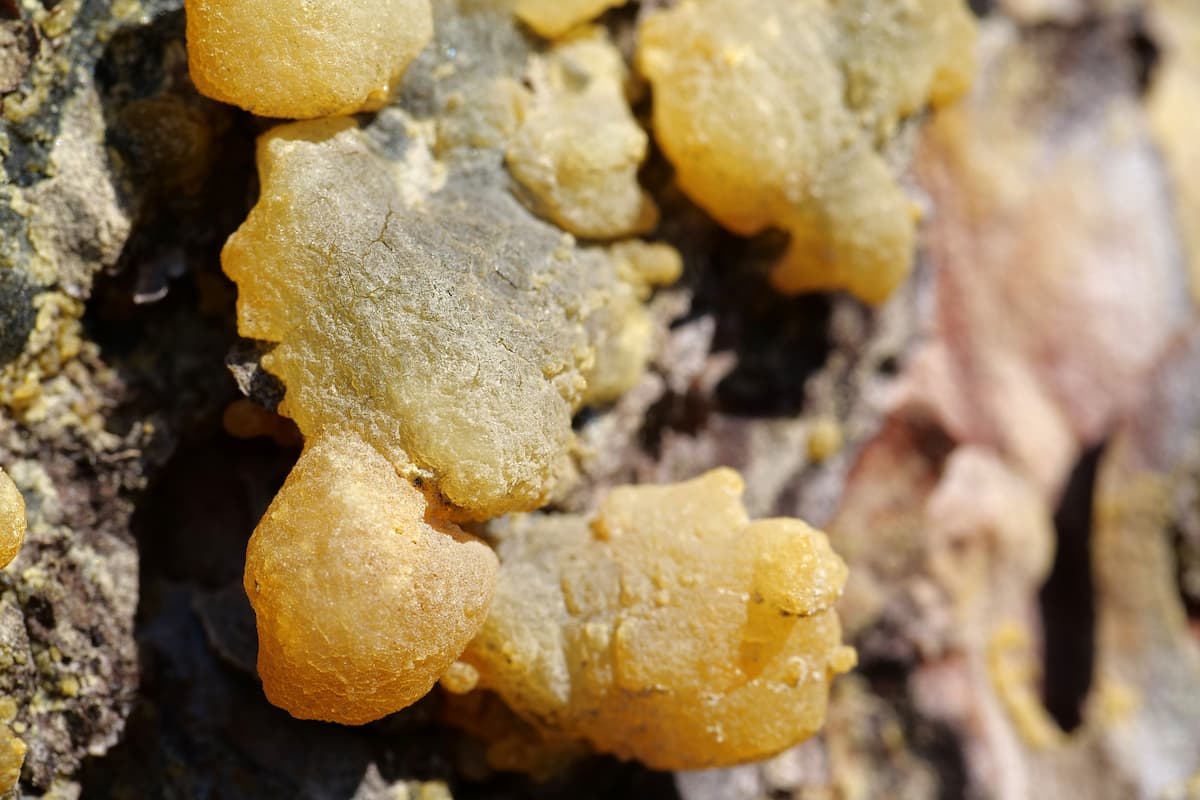
Ambergris
Ambergris excreted by sperm whales develops its distinctive scent through exposure to seawater and sunlight, becoming highly valuable. Its quality increases in proportion to the time it spends floating at sea, and the highest-quality material can sometimes cost ¥3,000 or more per gram.


Castoreum
Castoreum is collected from beavers’ castor sacs. Its scent varies with their habitat and diet, and they use it to mark territory. Drying the sacs and extracting them with alcohol changes the scent to vanilla-like or fruity notes, and it has been used in flavorings and perfumes for at least 100 years. In perfume, it is used particularly to impart a leathery effect, and it continues to be used as a natural fragrance material because there is no concern about depletion.
Civet
Civet is collected from civets’ scent glands. When diluted, it takes on a sensual, warm floral scent and helps a fragrance last longer. Today, however, synthetic fragrance materials are mainly used. Civet droppings are also used in the production of a special coffee, kopi luwak, to which digestive enzymes and fermentation impart a distinctive flavor. This coffee is extremely expensive, costing ¥30,000 or more for 500 g.

Musk
There are three types of musk: animal-derived, plant-derived, and synthetic. As well as bringing warmth and sensuality, musk helps improve a fragrance’s balance and longevity. Originally, it was collected from the glands of male musk deer; its powerful odor becomes pleasant when very highly diluted. Almost all musk available on the market today is synthetic, but it reproduces the scent of natural musk as closely as possible.